
Momentum
HospiDesk

Transforming Hospitality Operations: From Chaos to Intelligent Automation.
Summary
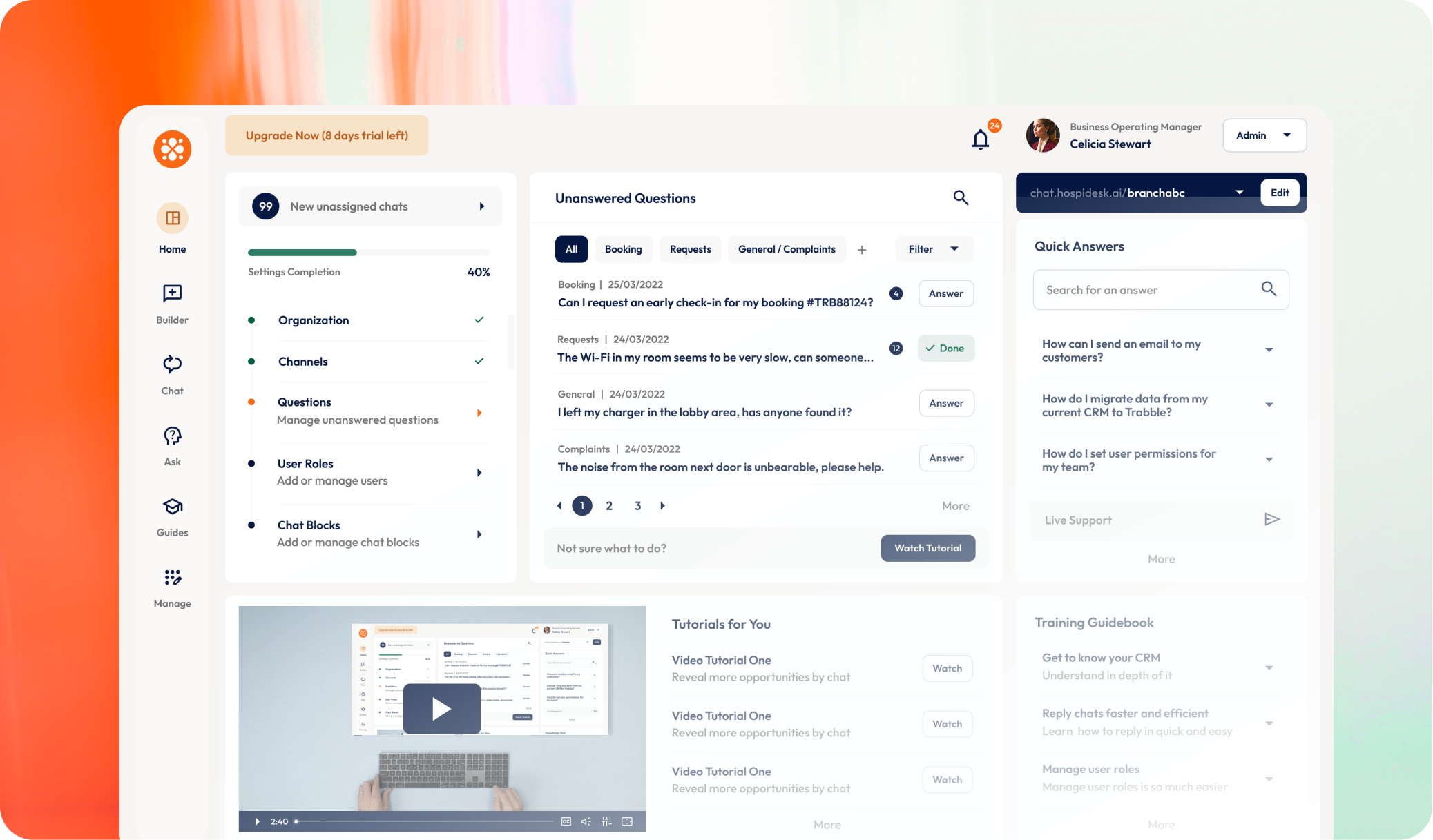
HospiDesk is an enterprise-grade SaaS platform designed to unify fragmented hospitality workflows. It empowers hotel chains to manage bookings, guest communications, and staff operations from a single, intelligent command center.
Client / Context
Self-Initiated Product Transformation (Based on Trippening Pte Ltd legacy IP)
Project Type
Enterprise SaaS & B2B
Workflow Automation
Role
Principal Product Architect
Status
Strategic Concept &
High-Fidelity Prototype
The Challenge
Hotel operations are traditionally fragmented. Front desk staff toggle between 5+ different screens (Booking Engine, CRM, Email, WhatsApp, Staff Chat) to handle a single guest request. This "context switching" leads to slow responses and burnt-out employees.
Key Challenges
Fragmented Channels
Guest messages come from Email, WhatsApp, Booking.com, and Walk-ins, creating a chaotic inbox.

Redundant Work
Staff waste hours typing the same reply to "What is the wifi password?" 50 times a day.
Invisible Bottlenecks
Managers have no visibility on which staff member is overloaded or which guest requests are overdue.
High
The Solution
Intelligent Unification.
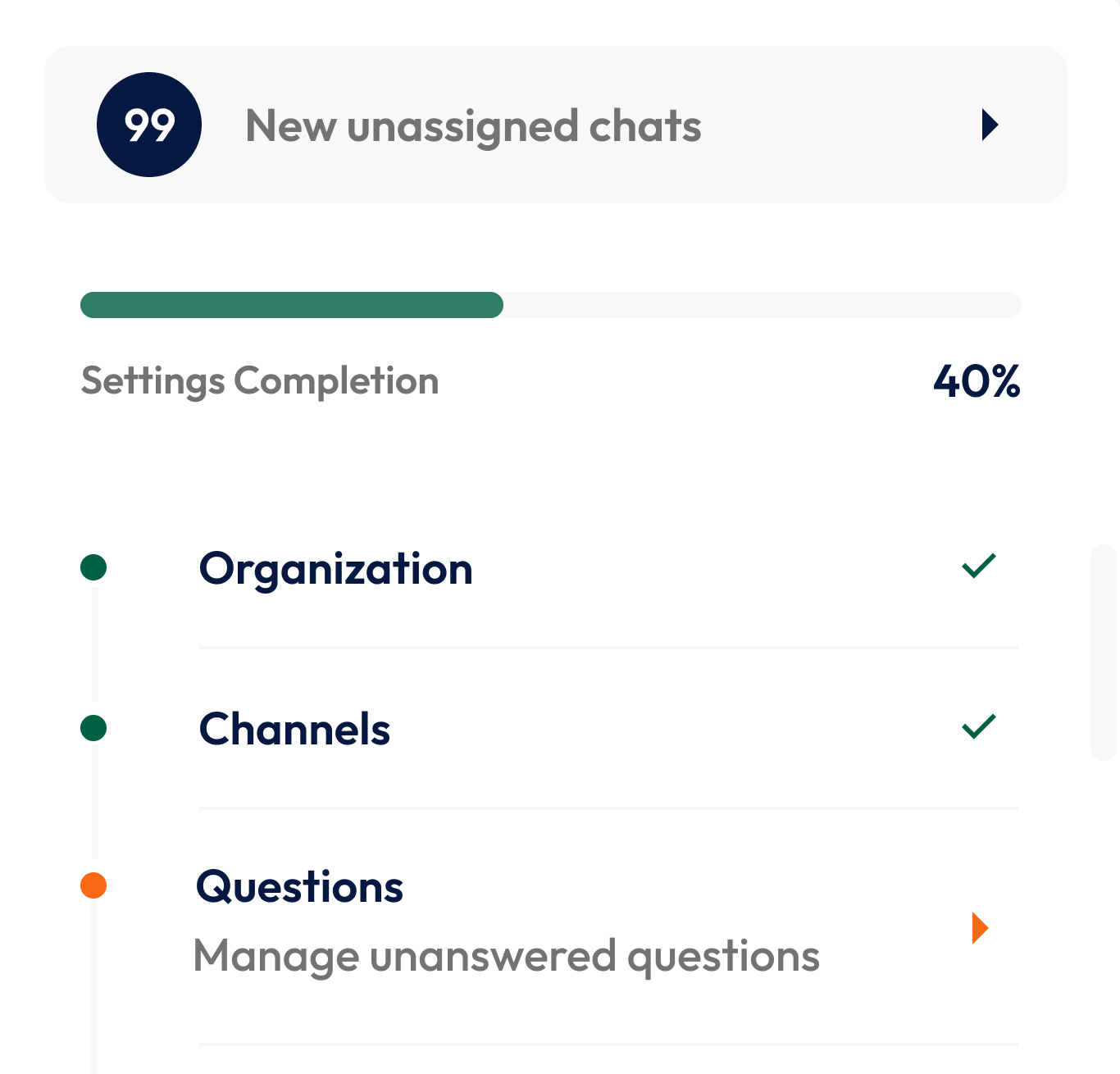
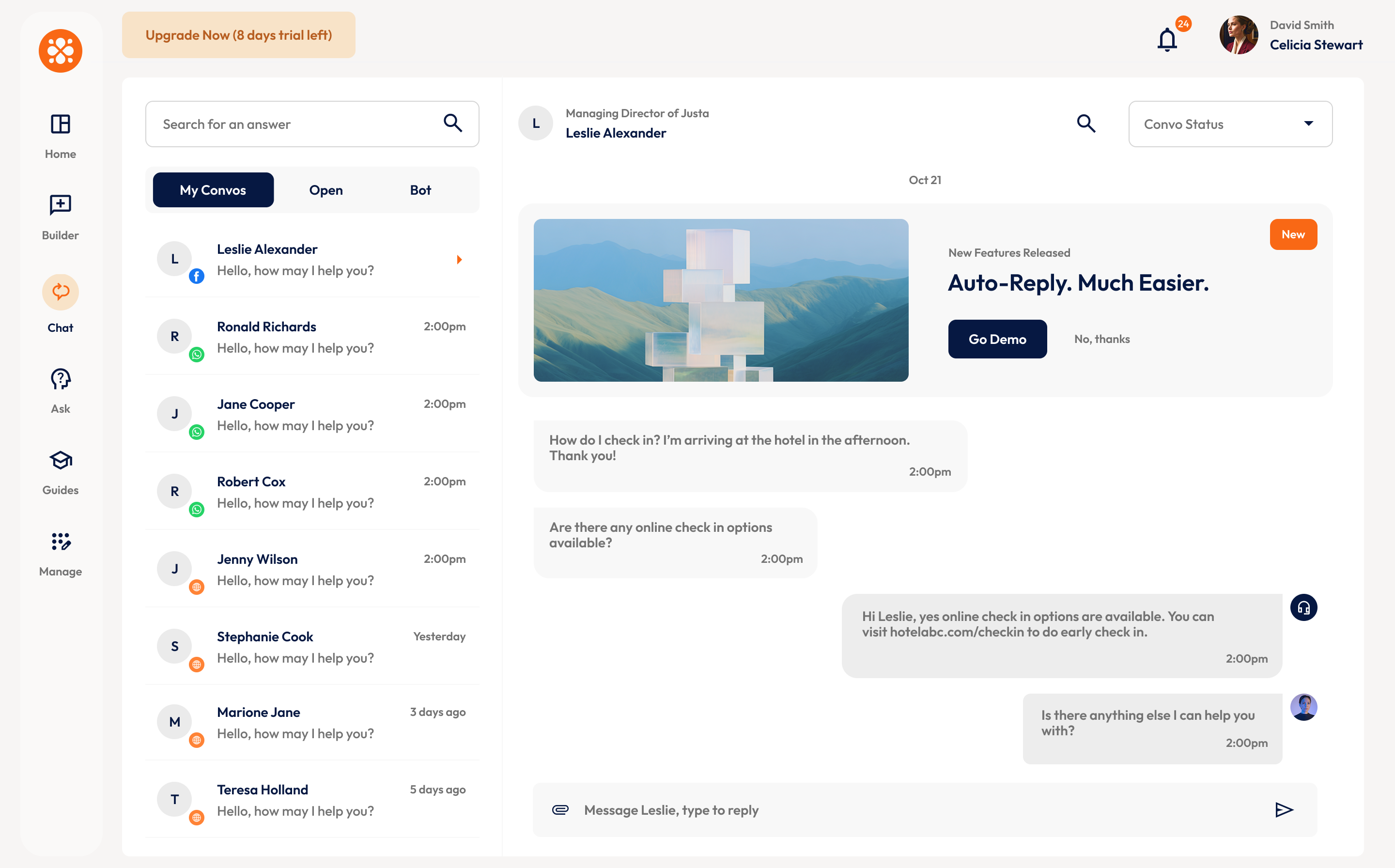
I re-architected HospiDesk from a simple booking tool into an AI-driven Operations Operating System (OOS). The new core is the "Smart Inbox" that aggregates streams from all channels and uses AI to group similar requests, allowing for bulk-actions and automated workflows.
Role & Approach
Moving upstream from SMB to Enterprise clients meant prioritizing Role-Based Efficiency. I designed distinct views for different personas (Desk Officer vs. Manager), ensuring that each user sees only what they need to act on.
Approach
Efficiency at Scale
The Core Experience
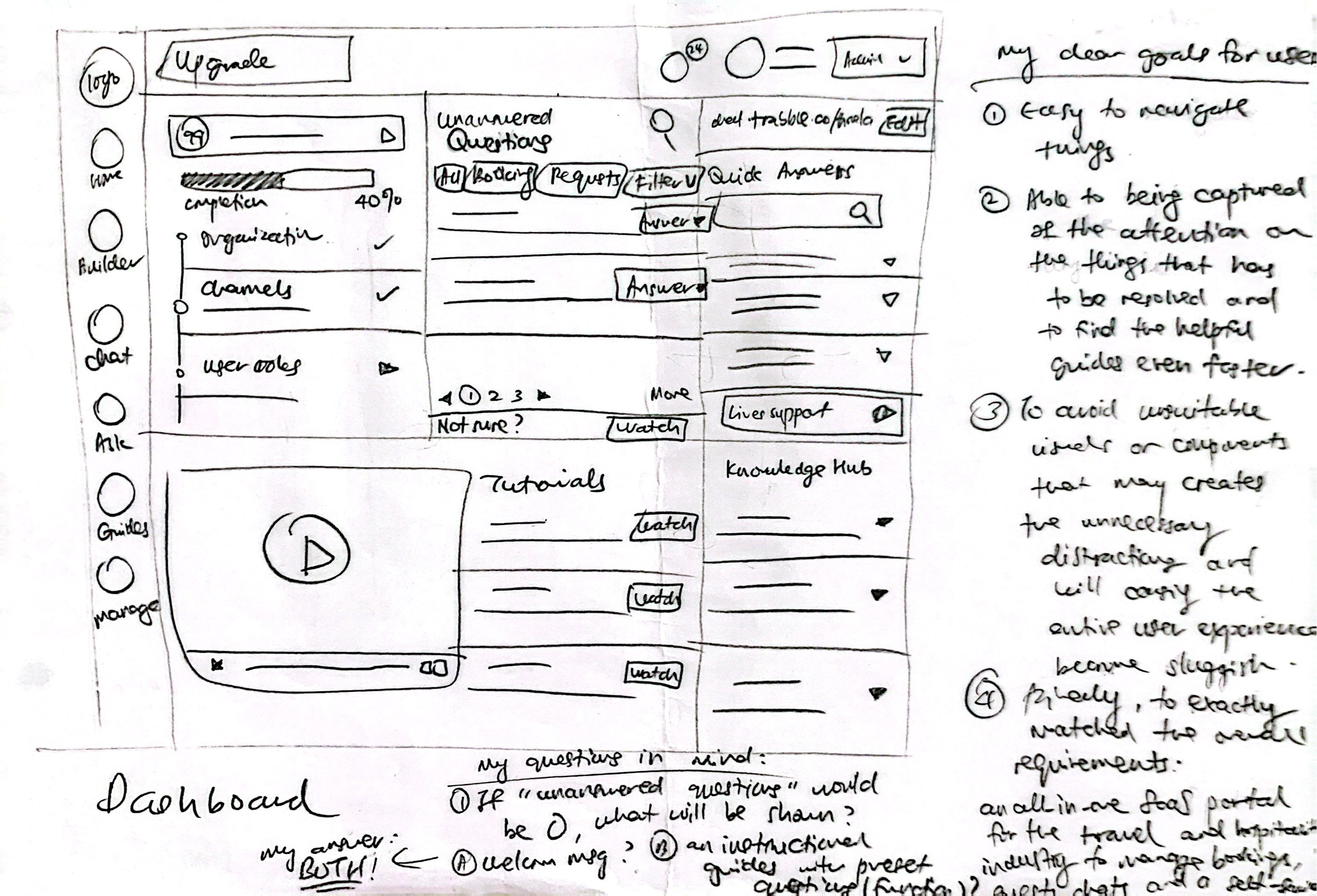
Solving The “Inbox Overload”
How "Deduplication" saves 40% ofstaff time.

The "Deduplication" Engine
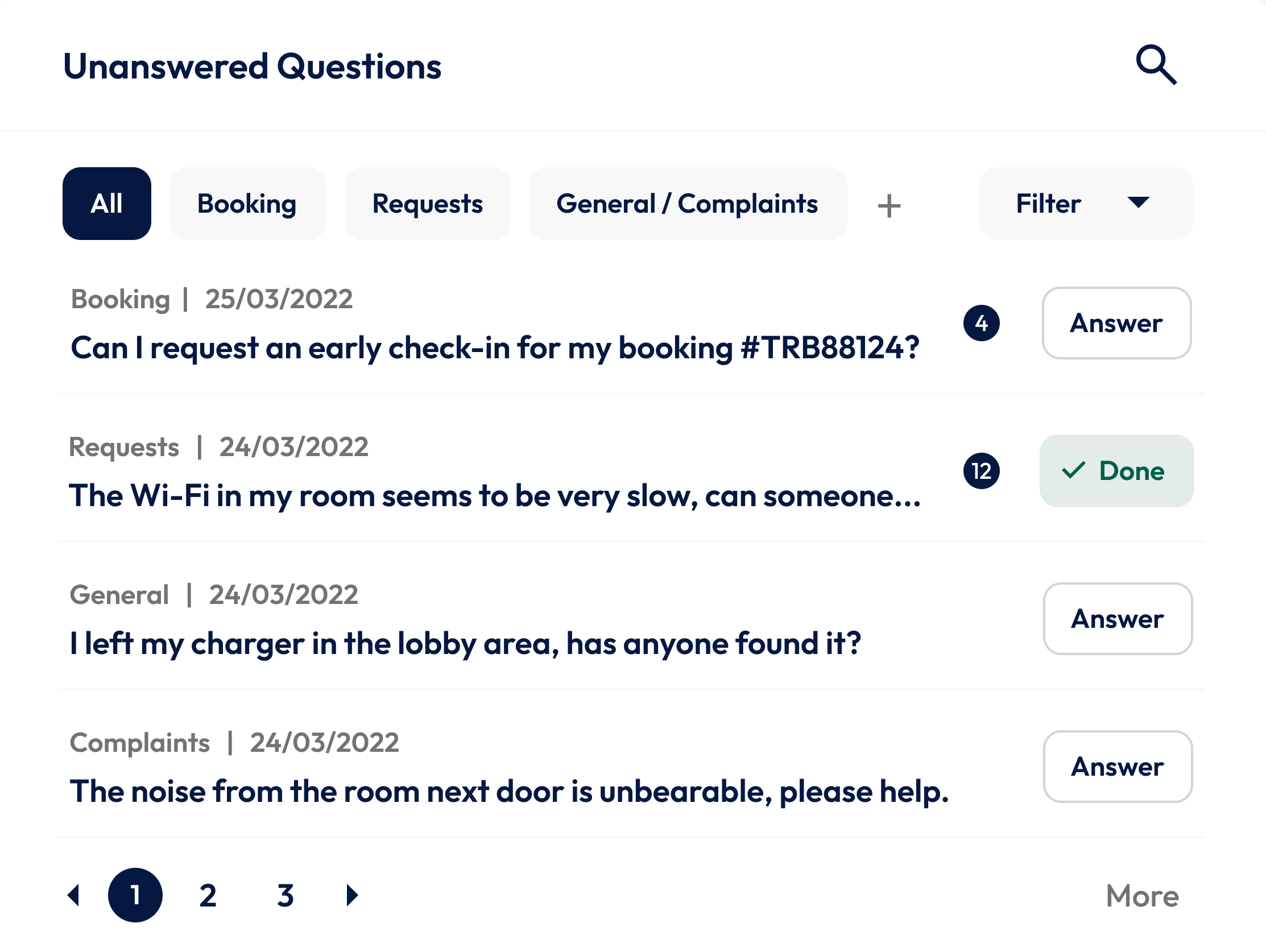
User Pain
“We received 20 messages today.”

"We received 20 messages asking about 'Early Check-in' today. I have to reply one by one.”
Solution
Smart Grouping. Enabled.
The system automatically detects semantic similarities and groups 20 messages into one cluster. The Admin replies once, and the system personalizes and sends it to all 20 guests.
Role-Based Views (RBAC)
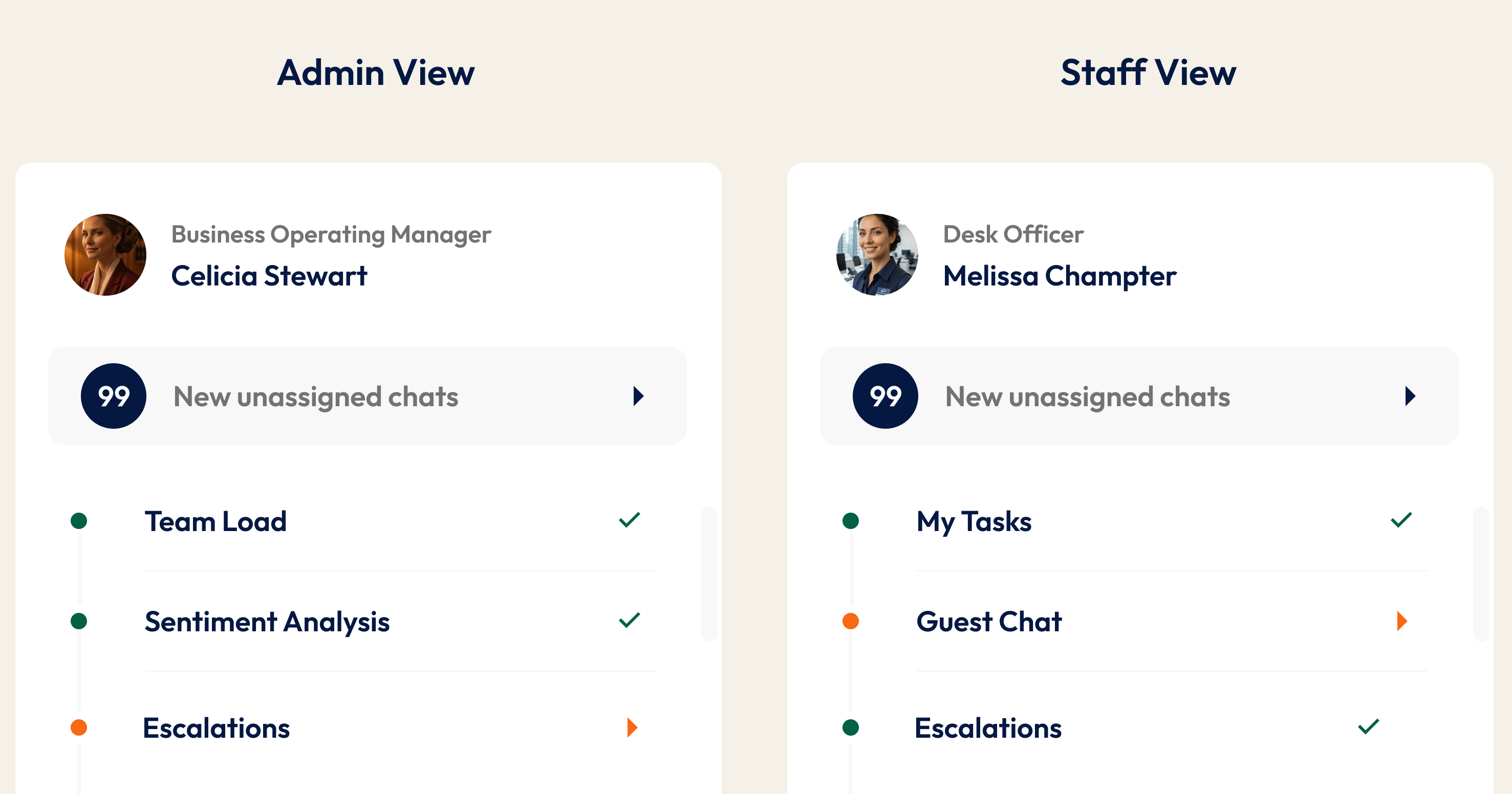
User Pain
“I see sensitive Manager Settings. Confusing.”
“I'm a junior staff, but I see sensitive Manager settings. It's confusing.”
Solution
Contextual Interface.
- Desk Officer: Sees only "My Tasks" & "Guest Chat".
- Manager: Sees "Team Load", "Sentiment Analysis", and "Escalations".
Proactive "Health Check”
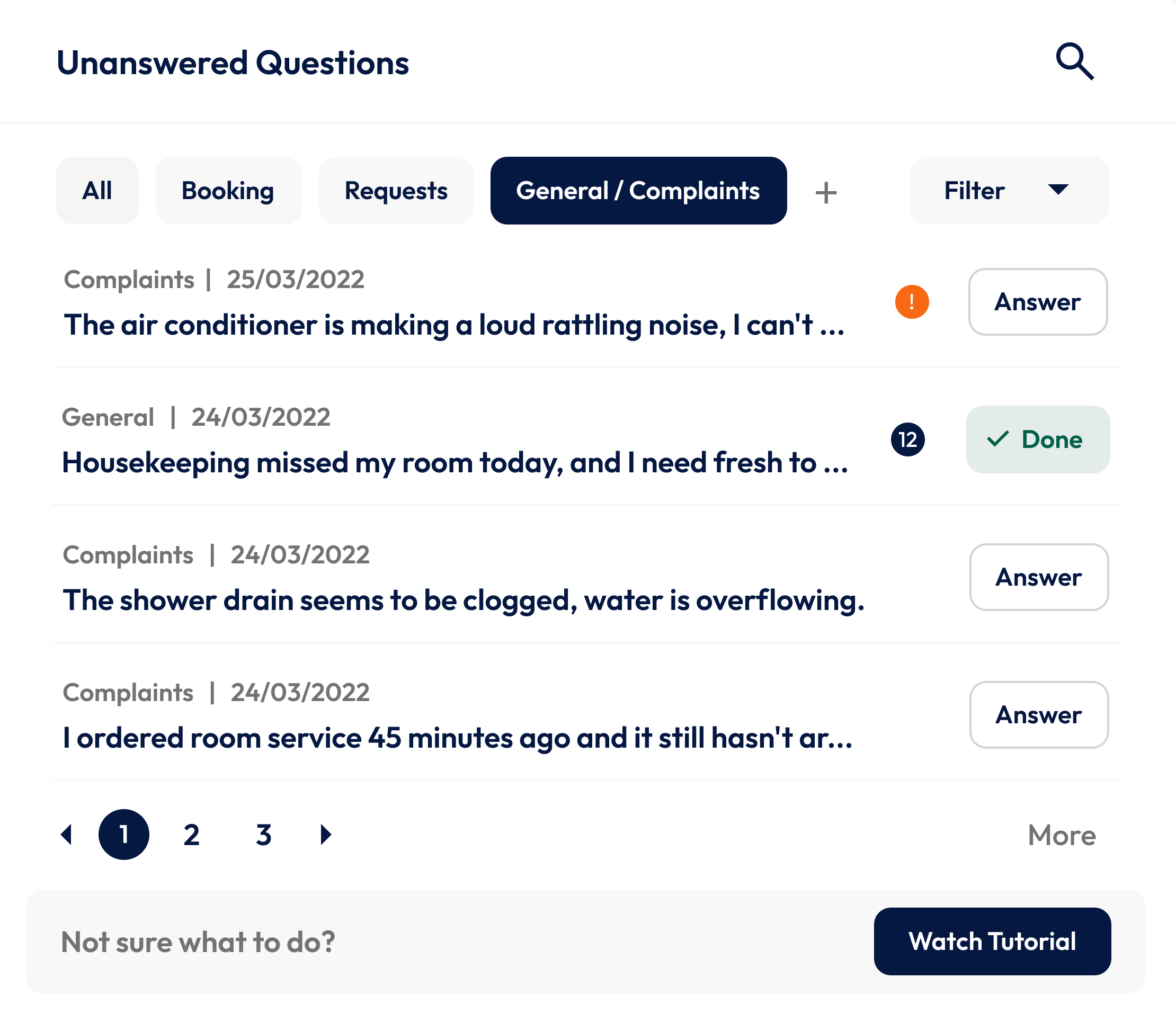
User Pain
“I don’t know we have a problem until...”
"I don't know we have a problem until a guest screams at the counter."
Solution
Sentiment Heatmap.
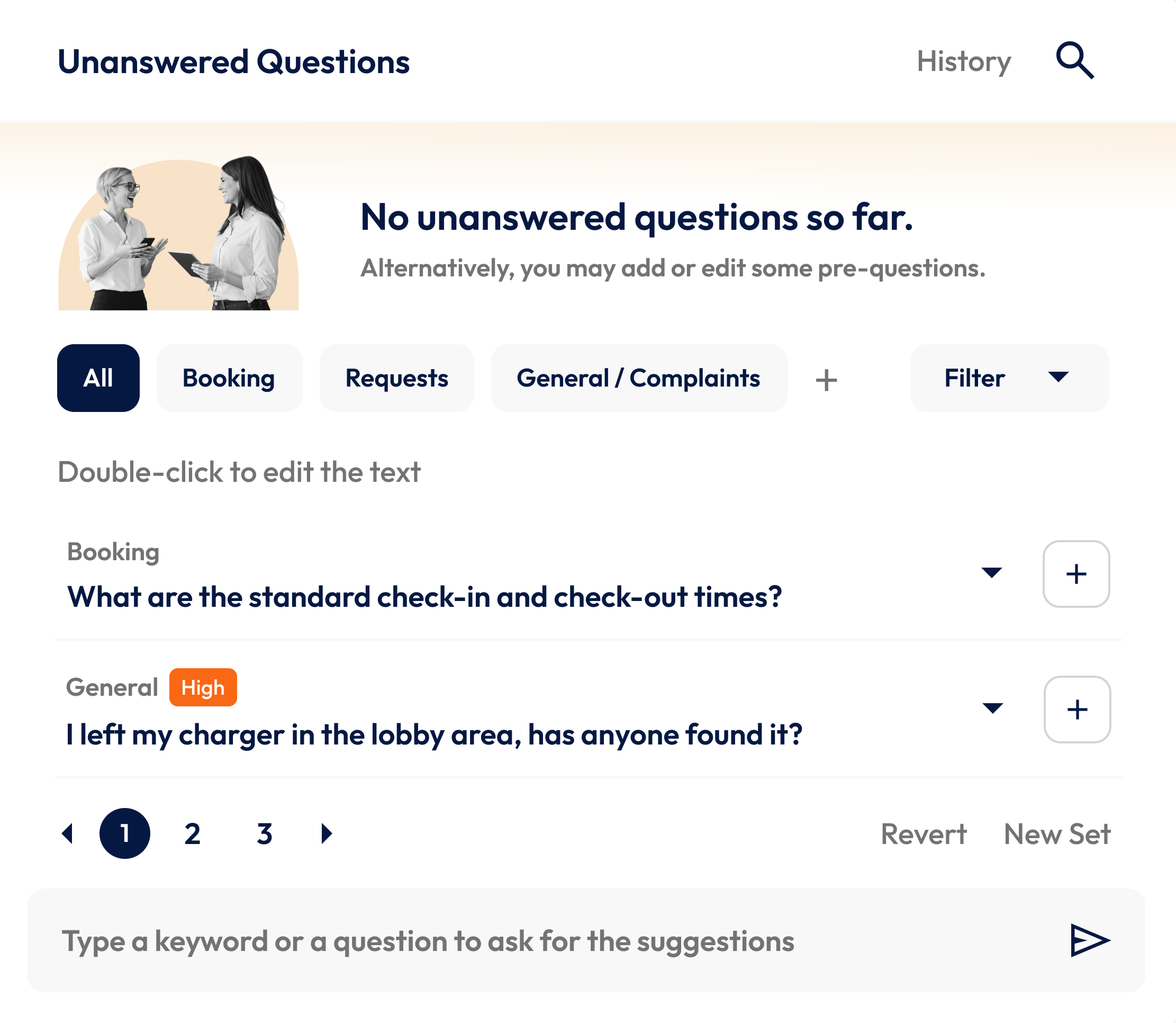
The dashboard highlights "High Tension" conversations in red (e.g., "Unbearable noise"), prioritizing them for immediate Manager intervention.
Built for Enterprise Scale
Designed with a strict Atomic Design methodology to support white-labeling for multi-property hotel groups. The system supports high-density data tables for Power Users while maintaining accessibility standards.

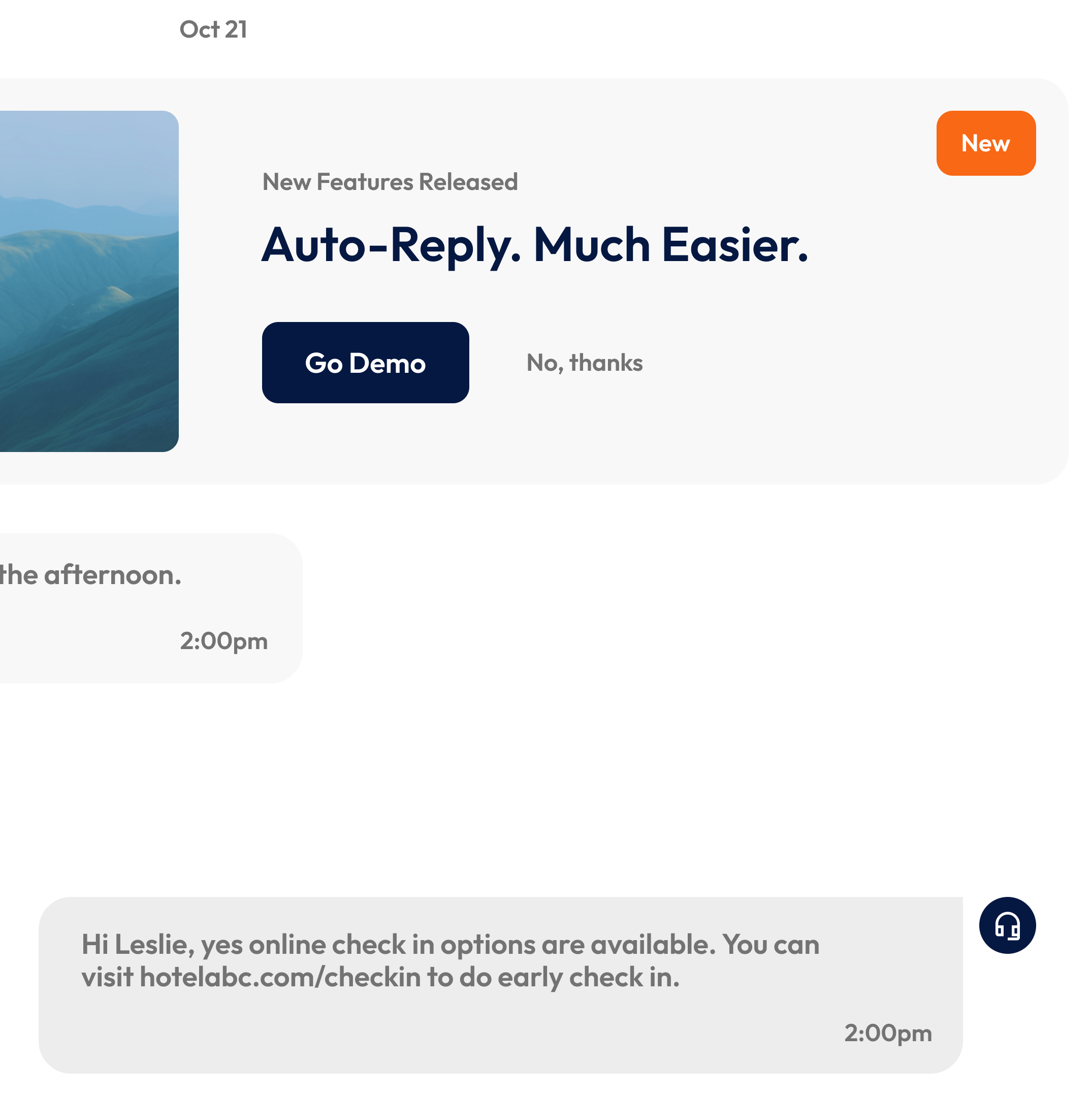
Auto-reply
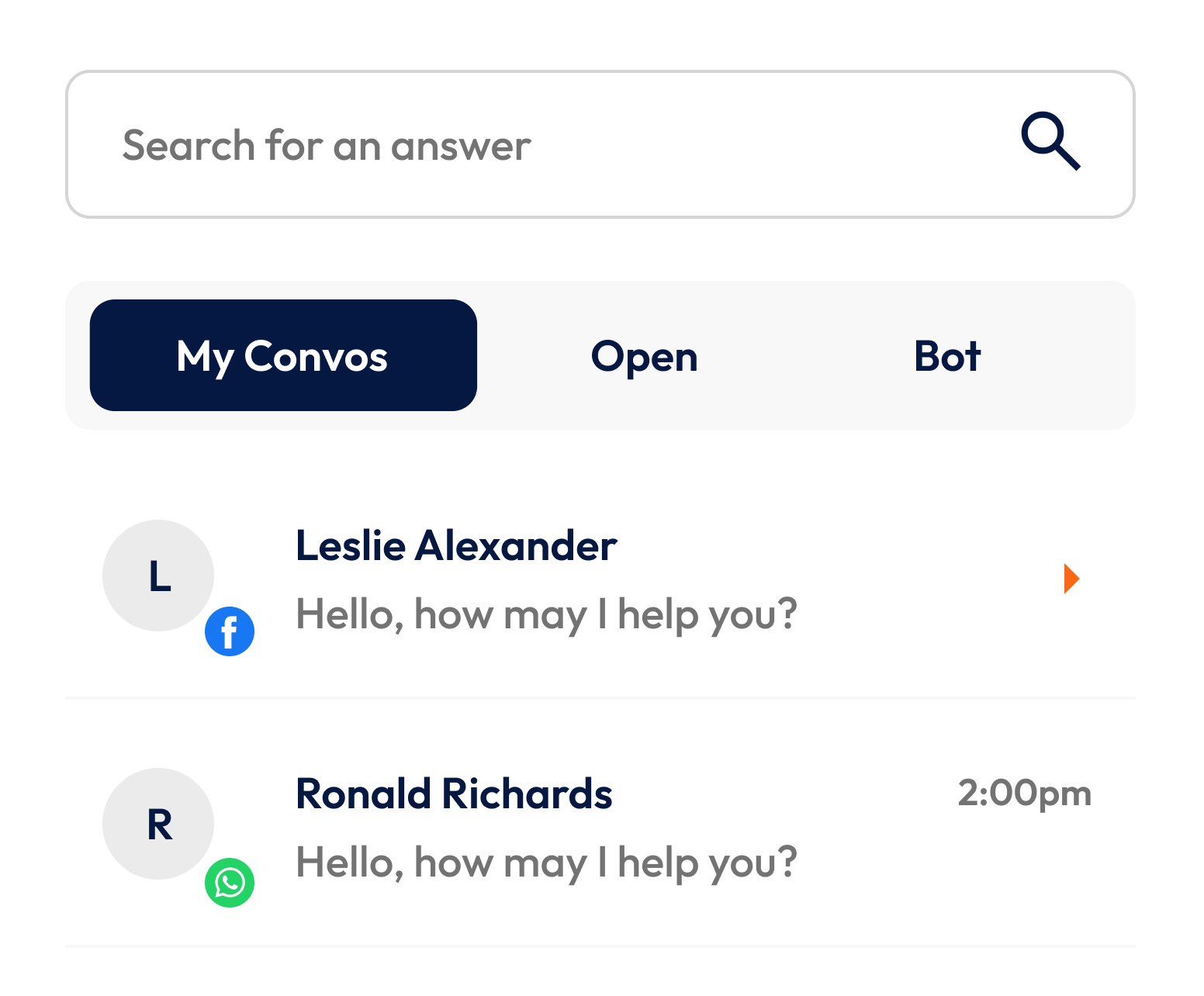
Reduce front-desk workload with intelligent automation. The system instantly handles routine guest inquiries—like check-in details or wifi access—ensuring 24/7 responsiveness without adding headcount.
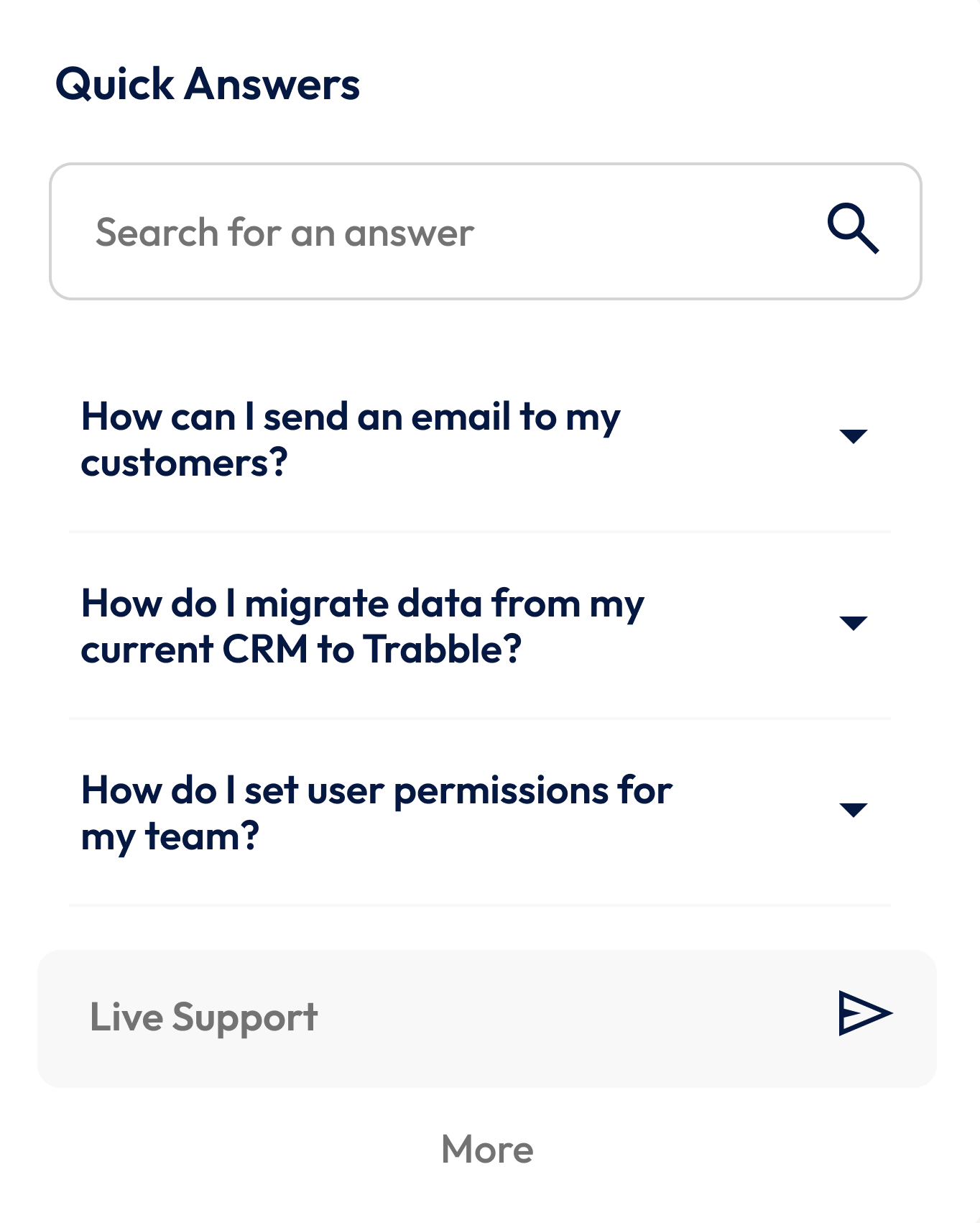
Quick Answers
Accelerate staff onboarding with an integrated knowledge base. New hires can instantly find answers to technical workflows—from data migration to permission settings—without leaving the interface.
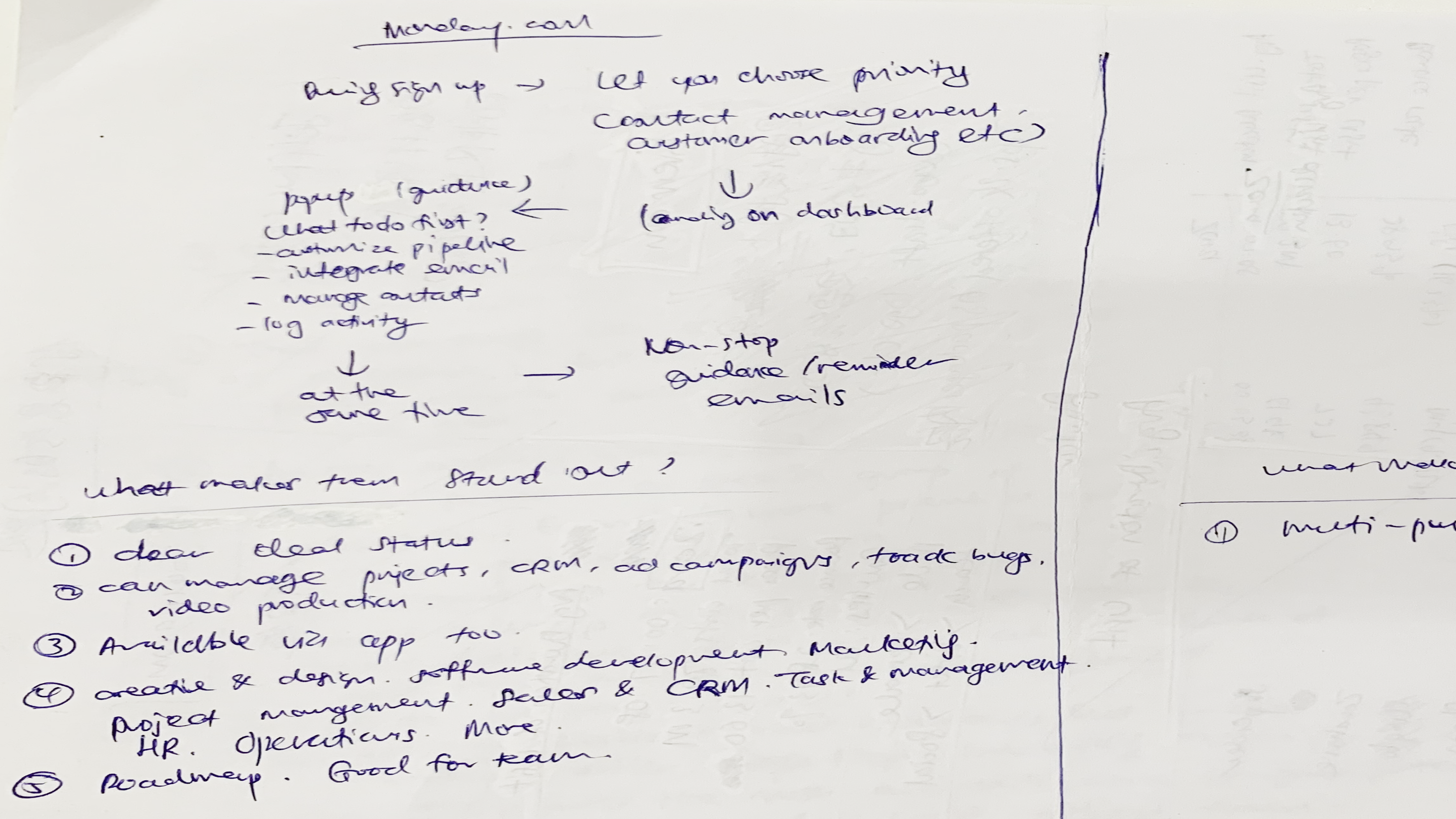
The Reference
Inspired by tools like Monday.com, I introduced a customizable 'Kanban View' for guest requests, allowing teams to build their own workflows.
Projected Impact
Efficiency as ROI
The Impact
40%
40% Reduction in Response Time
(via Deduplication & Smart Replies).
0
Zero Missed Complaints
(via Sentiment-based auto-escalation).
3x
3x Faster Onboarding (New staff use "Quick Answers" instead of memorizing policies).
Disclaimer
This case study represents a conceptual redesign and strategic pivot based on the legacy Trippening platform. While informed by real-world industry pain points, the "HospiDesk" brand and specific UI artifacts presented here are conceptual works designed to demonstrate Principal-level product thinking.

Copyright © 2026

HospiDesk
Transforming Hospitality Operations: From Chaos to Intelligent Automation.
Summary
HospiDesk is an enterprise-grade SaaS platform designed to unify fragmented hospitality workflows. It empowers hotel chains to manage bookings, guest communications, and staff operations from a single, intelligent command center.
Client / Context
Self-Initiated Product Transformation (Based on Trippening Pte Ltd legacy IP)

Project Type
Enterprise SaaS & B2B
Workflow Automation
Role
Principal Product Architect
Status
Strategic Concept & High-Fidelity Prototype
The Challenge
Hotel operations are traditionally fragmented. Front desk staff toggle between 5+ different screens (Booking Engine, CRM, Email, WhatsApp, Staff Chat) to handle a single guest request. This "context switching" leads to slow responses and burnt-out employees.
Key Challenges
Fragmented Channels
Guest messages come from Email, WhatsApp, Booking.com, and Walk-ins, creating a chaotic inbox.

Redundant Work
Staff waste hours typing the same reply to "What is the wifi password?" 50 times a day.
Invisible Bottlenecks
Managers have no visibility on which staff member is overloaded or which guest requests are overdue.
High

The Solution
Intelligent Unification.
I re-architected HospiDesk from a simple booking tool into an AI-driven Operations Operating System (OOS). The new core is the "Smart Inbox" that aggregates streams from all channels and uses AI to group similar requests, allowing for bulk-actions and automated workflows.
Role & Approach
Moving upstream from SMB to Enterprise clients meant prioritizing Role-Based Efficiency. I designed distinct views for different personas (Desk Officer vs. Manager), ensuring that each user sees only what they need to act on.
Approach
Efficiency at Scale
The Core Experience
Solving The "Inbox Overload”
How "Deduplication" saves 40% of staff time.

The "Deduplication" Engine
User Pain
“We received 20 messages today.”

"We received 20 messages asking about 'Early Check-in' today. I have to reply one by one.”
Solution
Smart Grouping. Enabled.
The system automatically detects semantic similarities and groups 20 messages into one cluster. The Admin replies once, and the system personalizes and sends it to all 20 guests.
Role-Based Views (RBAC)
User Pain
“I see sensitive Manager Settings. Confusing.”
“I'm a junior staff, but I see sensitive Manager settings. It's confusing.”
Solution
Contextual Interface.
- Desk Officer: Sees only "My Tasks" & "Guest Chat".
- Manager: Sees "Team Load", "Sentiment Analysis", and "Escalations".
Proactive "Health Check”
User Pain
“I don’t know we have a problem until...”
"I don't know we have a problem until a guest screams at the counter."
Solution
Sentiment Heatmap.
The dashboard highlights "High Tension" conversations in red (e.g., "Unbearable noise"), prioritizing them for immediate Manager intervention.
Built for Enterprise Scale
Designed with a strict Atomic Design methodology to support white-labeling for multi-property hotel groups. The system supports high-density data tables for Power Users while maintaining accessibility standards.

Auto-reply
Reduce front-desk workload with intelligent automation. The system instantly handles routine guest inquiries—like check-in details or wifi access—ensuring 24/7 responsiveness without adding headcount.
Quick Answers
Accelerate staff onboarding with an integrated knowledge base. New hires can instantly find answers to technical workflows—from data migration to permission settings—without leaving the interface.
The Reference
Inspired by tools like Monday.com, I introduced a customizable 'Kanban View' for guest requests, allowing teams to build their own workflows.
Projected Impact
Efficiency as ROI
The Impact
40%
40% Reduction in Response Time
(via Deduplication & Smart Replies).
0
Zero Missed Complaints
(via Sentiment-based auto-escalation).
3x
3x Faster Onboarding (New staff use "Quick Answers" instead of memorizing policies).
Disclaimer
This case study represents a conceptual redesign and strategic pivot based on the legacy Trippening platform. While informed by real-world industry pain points, the "HospiDesk" brand and specific UI artifacts presented here are conceptual works designed to demonstrate Principal-level product thinking.

Copyright © 2026


HospiDesk
Transforming Hospitality Operations: From Chaos to Intelligent Automation.
Summary
HospiDesk is an enterprise-grade SaaS platform designed to unify fragmented hospitality workflows. It empowers hotel chains to manage bookings, guest communications, and staff operations from a single, intelligent command center.
Client / Context
Self-Initiated Product Transformation (Based on Trippening Pte Ltd legacy IP)

Project Type
Enterprise SaaS & B2BWorkflow Automation
Role
Principal Product Architect
Status
Strategic Concept &High-Fidelity Prototype
The Challenge
Hotel operations are traditionally fragmented. Front desk staff toggle between 5+ different screens (Booking Engine, CRM, Email, WhatsApp, Staff Chat) to handle a single guest request. This "context switching" leads to slow responses and burnt-out employees.
Key Challenges
Fragmented Channels
Guest messages come from Email, WhatsApp, Booking.com, and Walk-ins, creating a chaotic inbox.

Redundant Work
Staff waste hours typing the same reply to "What is the wifi password?" 50 times a day.
Invisible Bottlenecks
Managers have no visibility on which staff member is overloaded or which guest requests are overdue.
High

The Solution
Intelligent Unification.
I re-architected HospiDesk from a simple booking tool into an AI-driven Operations Operating System (OOS). The new core is the "Smart Inbox" that aggregates streams from all channels and uses AI to group similar requests, allowing for bulk-actions and automated workflows.
Role & Approach
Moving upstream from SMB to Enterprise clients meant prioritizing Role-Based Efficiency. I designed distinct views for different personas (Desk Officer vs. Manager), ensuring that each user sees only what they need to act on.
Approach
Efficiency at Scale
The Core Experience
Solving The "Inbox Overload”
How "Deduplication" saves 40% of staff time.

The "Deduplication" Engine
User Pain
“We received 20 messages today.”

"We received 20 messages asking about 'Early Check-in' today. I have to reply one by one.”
Solution
Smart Grouping.
Enabled.

The system automatically detects semantic similarities and groups 20 messages into one cluster. The Admin replies once, and the system personalizes and sends it to all 20 guests.
Role-Based Views (RBAC)
User Pain
“I see sensitive Manager Settings. Confusing.”
“I'm a junior staff, but I see sensitive Manager settings. It's confusing.”
Solution
Contextual
Interface.
- Desk Officer: Sees only "My Tasks" & "Guest Chat".
- Manager: Sees "Team Load", "Sentiment Analysis", and "Escalations".
Proactive "Health Check”
User Pain
“I don’t know we have a problem until...”
"I don't know we have a problem until a guest screams at the counter."
Solution
Sentiment
Heatmap.
The dashboard highlights "High Tension" conversations in red (e.g., "Unbearable noise"), prioritizing them for immediate Manager intervention.
Built for Enterprise Scale
Designed with a strict Atomic Design methodology to support white-labeling for multi-property hotel groups. The system supports high-density data tables for Power Users while maintaining accessibility standards.

Auto-reply
Reduce front-desk workload with intelligent automation. The system instantly handles routine guest inquiries—like check-in details or wifi access—ensuring 24/7 responsiveness without adding headcount.
Quick Answers
Accelerate staff onboarding with an integrated knowledge base. New hires can instantly find answers to technical workflows—from data migration to permission settings—without leaving the interface.
The Reference
Inspired by tools like Monday.com, I introduced a customizable 'Kanban View' for guest requests, allowing teams to build their own workflows.
Projected Impact
Efficiency as ROI
The Impact
40%
40% Reduction in Response Time (via Deduplication & Smart Replies).
0
Zero Missed Complaints
(via Sentiment-based auto-escalation).
3x
3x Faster Onboarding (New staff use "Quick Answers" instead of memorizing policies).
Disclaimer
This case study represents a conceptual redesign and strategic pivot based on the legacy Trippening platform. While informed by real-world industry pain points, the "HospiDesk" brand and specific UI artifacts presented here are conceptual works designed to demonstrate Principal-level product thinking.
Copyright © 2026